

2026-11-18
Discover how hydro demolition technology transforms concrete repair through ultra-high-pressure water jets, robotic automation, and selective material removal. Explore equipment selection, working principles, and applications in bridge deck rehabilitation.
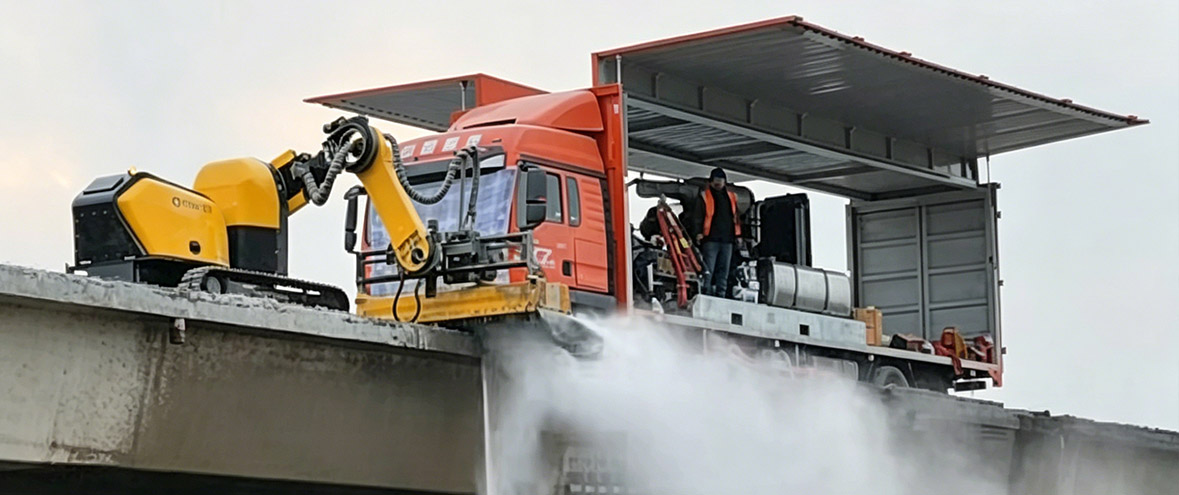
Aging concrete infrastructure presents a major challenge for bridge owners, highway authorities, construction contractors, and infrastructure maintenance companies. Cracks, corrosion, water penetration, and environmental exposure gradually weaken concrete structures, making timely rehabilitation essential.
Traditional concrete removal methods, such as pneumatic breakers and mechanical demolition tools, can generate significant vibration, noise, and airborne dust. In reinforced concrete structures, excessive mechanical impact may also create unwanted damage around the remaining concrete and reinforcement.
This is where hydro demolition provides an alternative approach. By using high-pressure or ultra-high-pressure water jets, specialized equipment selectively removes deteriorated concrete while helping preserve sound concrete and embedded reinforcement.
Modern robotic hydro demolition equipment makes this process more controllable and repeatable, particularly for demanding infrastructure projects such as bridge deck repairs, highway rehabilitation, and large-scale concrete restoration.
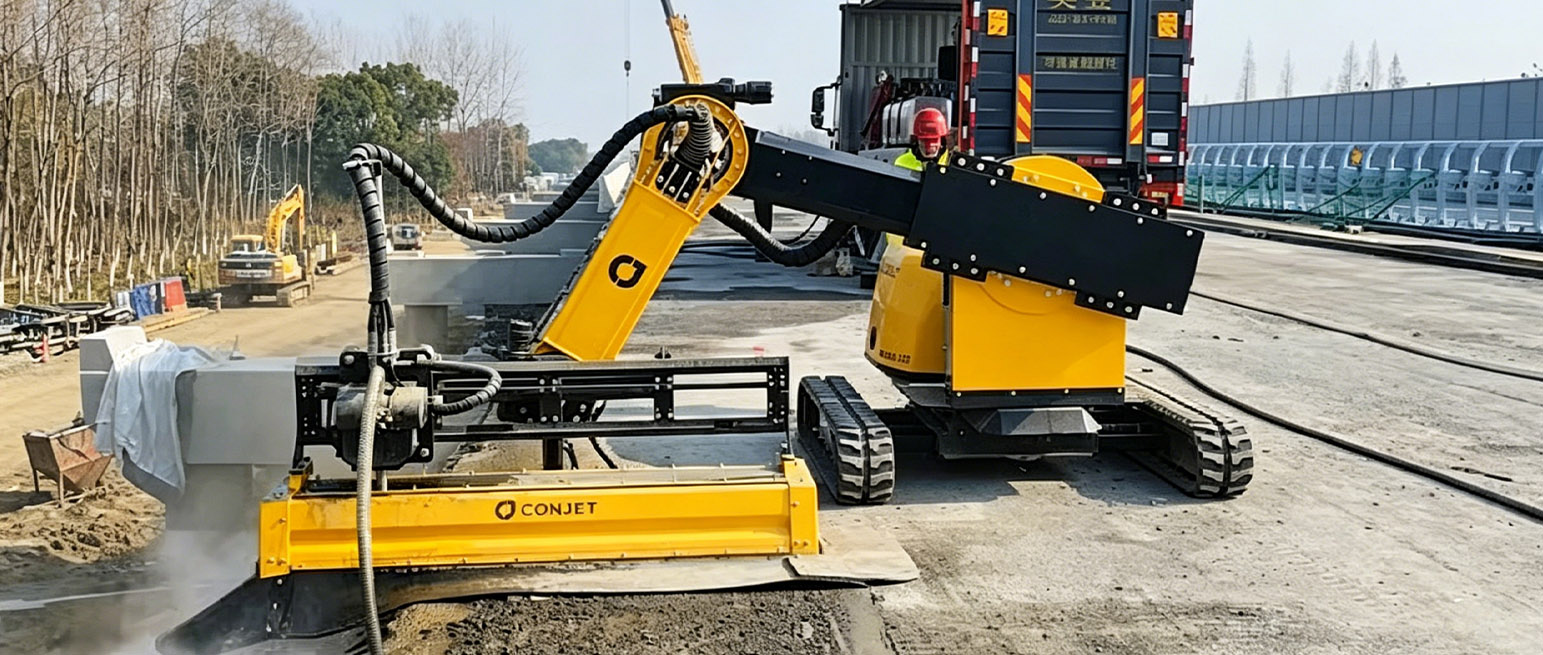
Hydro demolition, also known as hydrodemolition or hydro demolition of concrete, is a specialized concrete removal method that uses pressurized water jets to break down deteriorated or unwanted concrete material.
Unlike conventional demolition, which relies on direct mechanical impact, hydro demolition uses the energy of high-velocity water to penetrate the concrete's pore structure and remove material through controlled hydraulic action.
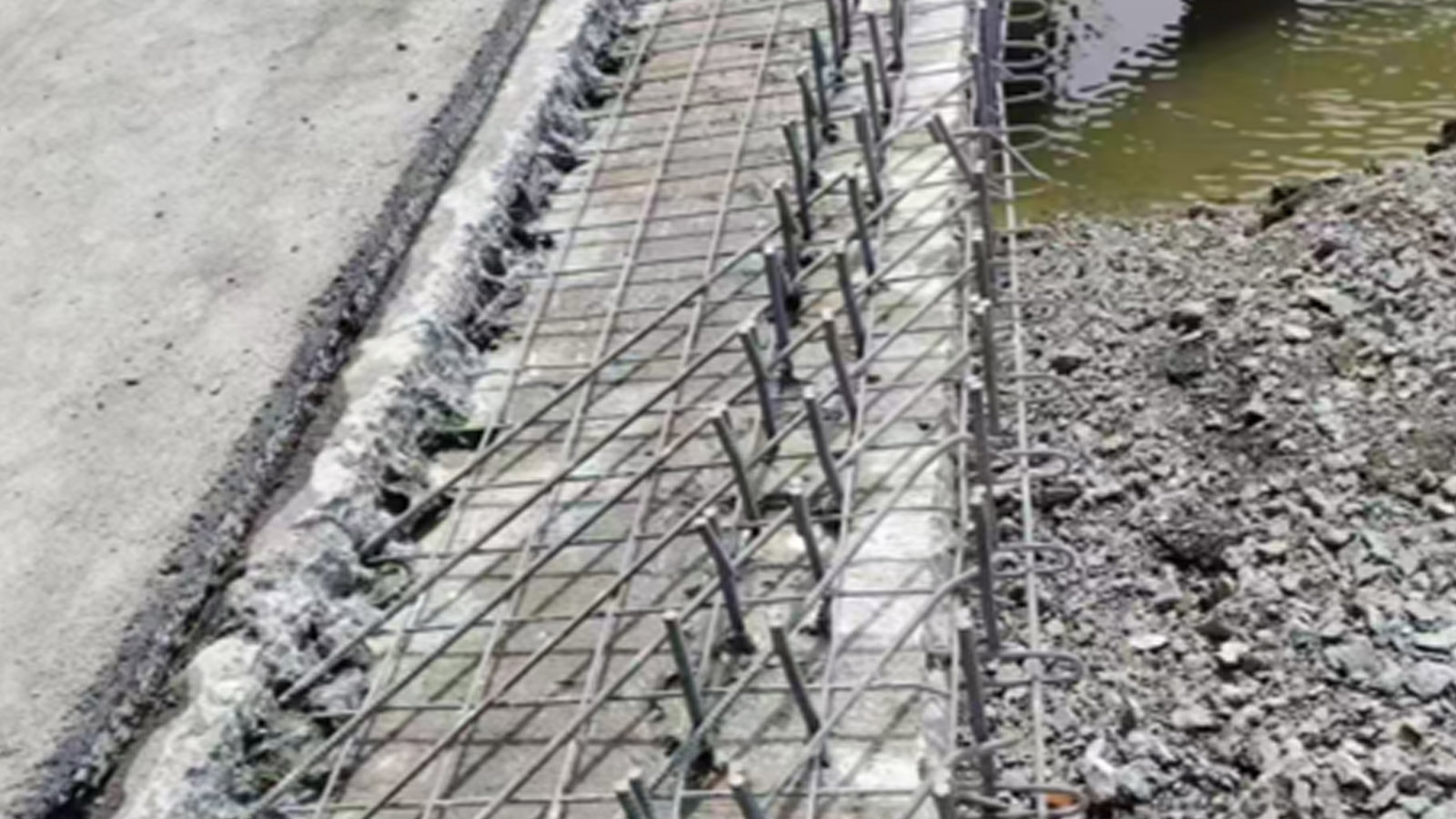
The process can selectively remove weakened concrete while retaining sound concrete and exposing reinforcement steel for inspection, cleaning, and subsequent repair work.
In infrastructure rehabilitation, removing damaged concrete is only one part of the process. The quality of the remaining surface is equally important because it directly influences the performance of the new repair material.
Hydro demolition can create a rough, textured concrete surface that provides a suitable mechanical bonding profile for repair mortar, replacement concrete, or structural overlays.
Targets deteriorated concrete while helping preserve surrounding sound material.
Removes concrete around embedded reinforcement to facilitate inspection and repair.
Produces a textured substrate suitable for subsequent concrete rehabilitation.
Allows removal parameters to be adjusted according to project conditions.

A hydro demolition machine combines a high-pressure water supply system, specialized jetting equipment, a mechanical positioning structure, and an operating control system.
During operation, pressurized water is delivered through specially designed nozzles. The water jet penetrates the concrete surface and removes weakened material through repeated hydraulic action.
Engineers inspect the concrete structure to identify deteriorated areas, reinforcement locations, removal requirements, and surrounding structural conditions.
The hydro demolition equipment is configured according to the required removal depth, working width, concrete condition, water supply, and site environment.
Water jets are directed toward the concrete surface. Controlled jetting parameters remove deteriorated material without relying on conventional impact tools.
Depending on the equipment configuration, automated or remotely controlled movement helps maintain consistent nozzle positioning and coverage across the working area.
Removed concrete fragments and water slurry are collected and managed according to site requirements. The exposed surface is then inspected and prepared for repair.
Engineers verify the removal depth, reinforcement condition, and surface profile before applying new repair materials or structural overlays.
The growing adoption of hydro demolition in infrastructure rehabilitation is driven by its ability to combine controlled material removal with improved surface preparation.
Traditional breakers generate repeated mechanical impacts that transmit vibration through the concrete structure. Hydro demolition uses water jet energy instead of direct impact, significantly reducing demolition-related vibration.
One of the major benefits of hydro demolition of concrete is its ability to remove surrounding concrete while exposing embedded reinforcement. Properly selected and controlled jetting parameters help preserve the reinforcement network for subsequent rehabilitation.
The process creates a roughened concrete surface that can support mechanical bonding between existing concrete and newly placed repair materials. Proper surface preparation is essential for durable structural repairs.
Because water is the primary working medium, hydro demolition can substantially reduce airborne dust compared with dry mechanical demolition. However, wastewater and concrete slurry still require appropriate containment and handling.
With suitable equipment configurations, hydro demolition can be applied to bridge decks, highway pavements, columns, piers, abutments, tunnels, and other reinforced concrete structures.
Professional hydro demolition equipment is an integrated engineering system rather than a standalone high-pressure pump. Each component contributes to removal performance, operational stability, and jobsite safety.
The pump generates the required water pressure and flow rate for concrete removal. The selection of pump capacity depends on the concrete condition, removal requirements, nozzle configuration, and project scale.
Specialized nozzles convert pressurized water into high-velocity jets. Nozzle design, jet arrangement, and working distance influence the removal profile and operating efficiency.
Robotic platforms support controlled equipment movement and consistent working patterns. They are especially valuable for large bridge decks and repetitive concrete removal operations.
Remote operation allows operators to control the equipment from a designated safe position, helping reduce direct exposure to high-pressure jetting areas and difficult working environments.
Effective water management and slurry collection are important for maintaining jobsite conditions and complying with environmental and wastewater disposal requirements.

Hydro demolition of bridge decks is one of the most important applications of modern concrete removal technology.
Bridge decks are constantly exposed to vehicle loading, temperature changes, moisture, deicing salts, and other environmental conditions. Over time, these factors can cause concrete deterioration, reinforcement corrosion, delamination, and surface damage.
When damaged concrete needs to be removed, protecting the remaining structure and embedded reinforcement is a critical consideration. This is why hydro demolition equipment is increasingly considered for bridge deck rehabilitation projects.
Helps remove deteriorated concrete while retaining sound portions of the bridge deck.
Helps expose reinforcement for inspection and subsequent repair without conventional mechanical impact.
Produces a roughened substrate suitable for concrete overlays and replacement materials.
Automated movement can support systematic removal across extensive bridge deck surfaces.
For bridge owners and infrastructure contractors, the objective is not simply to remove concrete quickly. It is to create the right conditions for a durable repair while minimizing unnecessary damage to the existing structure.
Fedjetting provides robotic and high-pressure water jet hydrodemolition solutions designed for bridge and highway concrete rehabilitation.
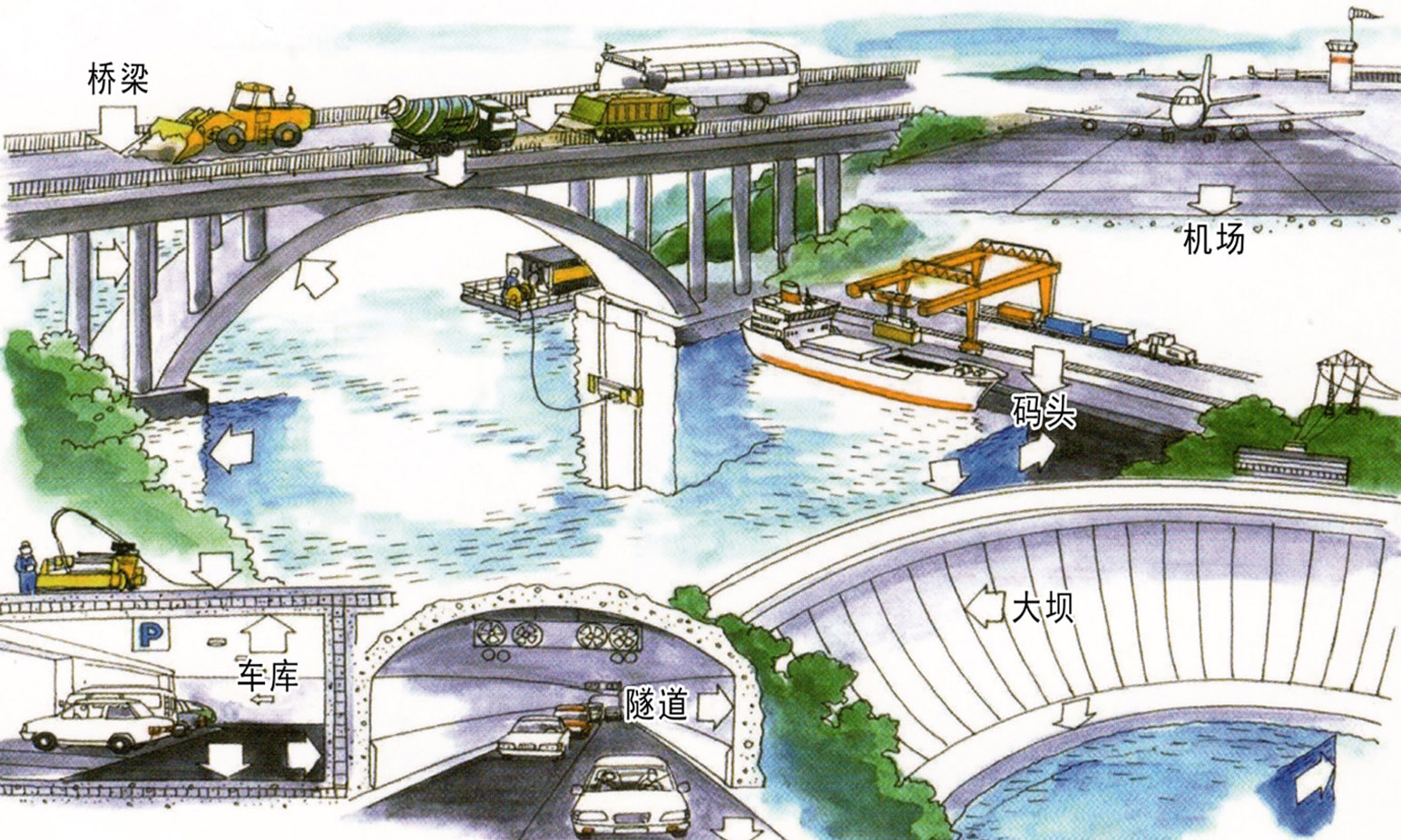
Beyond bridge deck rehabilitation, hydro demolition machines can support a wide range of concrete maintenance and infrastructure renovation projects.
Water jet technology can selectively remove deteriorated concrete from bridge piers, abutments, and other structural elements, helping prepare surfaces for repair.
Hydro demolition can be used in selected concrete pavement restoration projects where controlled material removal and surface preparation are required.
Specialized hydro demolition equipment can be configured for concrete repair in tunnels, culverts, and underground infrastructure, subject to access and water management conditions.
Industrial facilities may require concrete removal during structural maintenance, renovation, and equipment foundation modifications.
Hydro demolition can remove existing surface layers and prepare a textured substrate for new concrete overlays, subject to the project's engineering specifications.
Both hydro demolition and mechanical demolition are used in concrete removal. However, their working principles and suitability differ depending on the structural condition and project requirements.
| Comparison | Hydro Demolition | Mechanical Demolition |
|---|---|---|
| Working Principle | High-pressure water jets | Mechanical impact and breaking |
| Structural Vibration | Low demolition-related vibration | Generally higher vibration |
| Rebar Protection | Can selectively remove concrete around reinforcement | Requires careful control to avoid mechanical damage |
| Surface Finish | Roughened bonding profile | May require additional surface preparation |
| Airborne Dust | Water helps suppress dust | Dust generation can be significant |
| Waste Management | Water and concrete slurry management required | Concrete debris collection required |
| Typical Applications | Selective structural concrete removal and rehabilitation | General demolition and bulk concrete breaking |
The most suitable method depends on project scale, concrete condition, structural sensitivity, removal depth, access, budget, and environmental requirements. In some projects, hydro demolition and mechanical methods may also be used together.
If you are evaluating hydro demolition equipment for sale, selecting a suitable system requires more than comparing equipment prices or maximum pressure ratings.
Contractors should evaluate the following technical and operational factors before making an investment.
Different projects require different concrete removal depths. Equipment should provide the necessary adjustment and control to meet the engineering specifications.
Both pressure and flow rate influence the jetting process. A suitable pump configuration must match the required concrete removal performance and nozzle design.
For large-scale projects, robotic operation can improve working consistency and reduce the need for operators to work close to the demolition area.
Bridge decks, highway pavements, and confined infrastructure environments have different space and access requirements. Consider equipment dimensions, movement, and installation conditions.
Evaluate available water supply, wastewater collection, slurry separation, and site-specific environmental requirements before choosing a system.
A professional hydro demolition equipment manufacturer should understand concrete removal applications, provide technical configuration support, and assist with commissioning, operator training, and after-sales service.
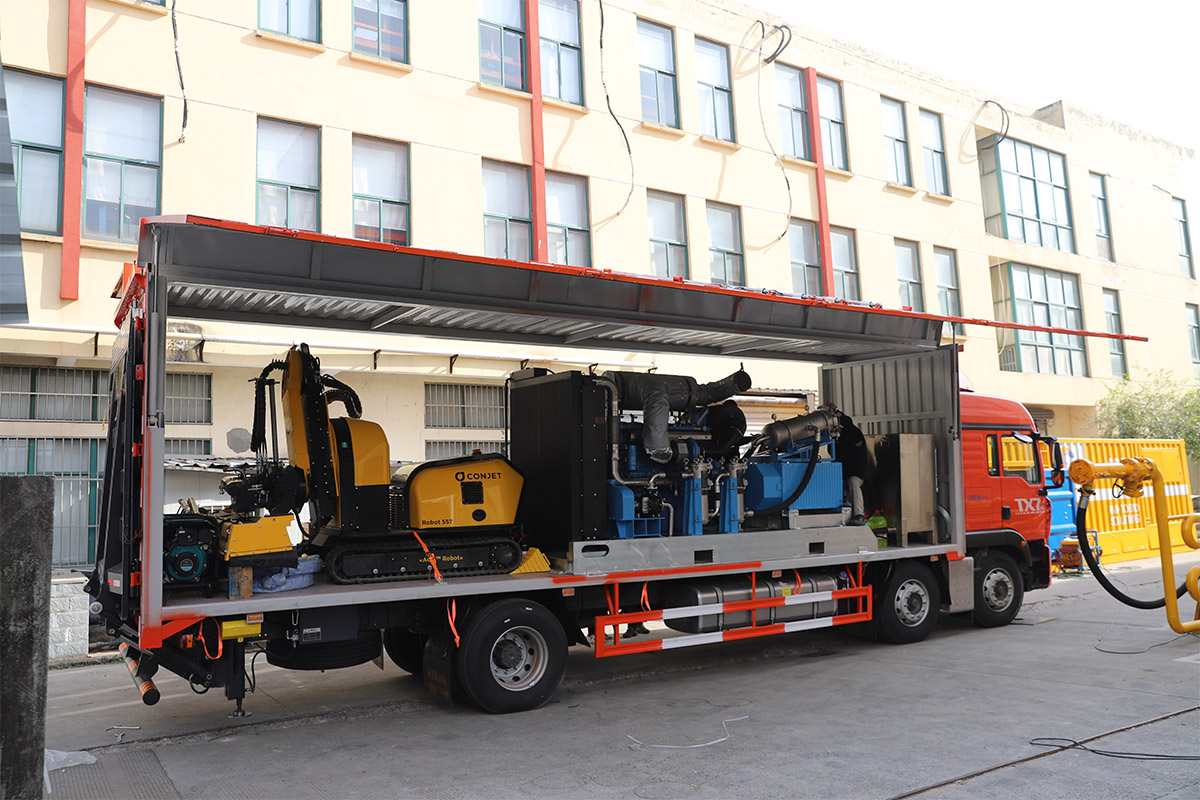
Fedjetting specializes in ultra-high-pressure water jet technology, automation integration, and industrial water jet equipment manufacturing.
With more than 12 years of experience in concrete hydrodemolition applications, Fedjetting has developed specialized solutions for road and bridge repair projects.
Our hydro demolition solutions combine high-pressure water jet technology with robotic and automated operating systems to support controlled concrete removal in demanding infrastructure environments.
Whether you are planning bridge deck rehabilitation, highway concrete repair, or other infrastructure maintenance work, Fedjetting can help evaluate your requirements and recommend an appropriate hydro demolition solution.
Learn more about our Concrete Hydrodemolition System .
Upgrade your concrete rehabilitation projects with advanced water jet technology. Contact Fedjetting to discuss your bridge deck repair, highway maintenance, or industrial concrete removal requirements.
Explore Hydro Demolition Systems → Request a Quotation →


